
 SEARCH
 FIND A DEALER

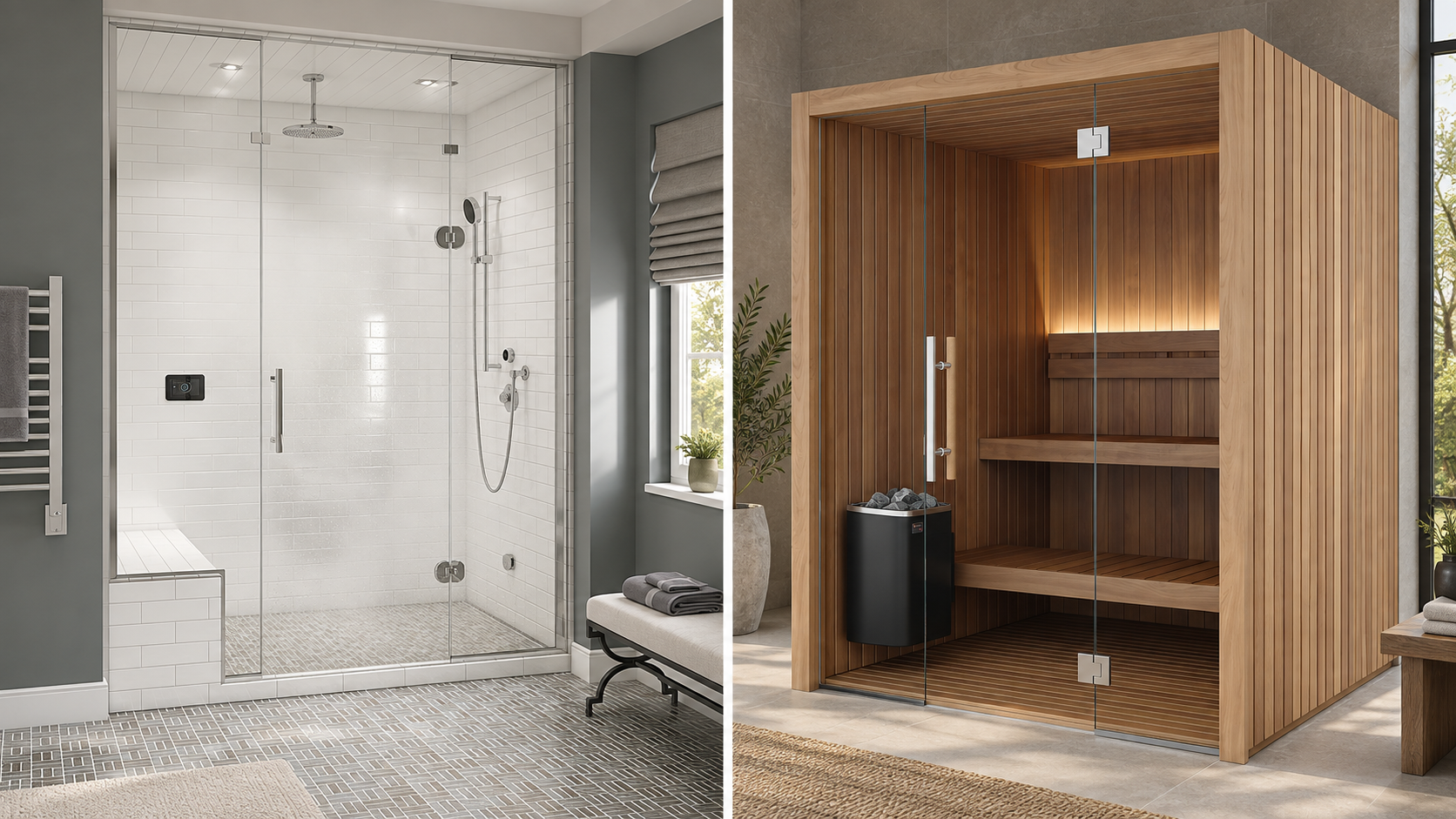
Steam Shower or Sauna: Which Suits Your Lifestyle?
The better choice is the one that fits a routine you already keep.
If a daily shower is already part of your life, steam fits naturally into it. If you are willing to set aside time for a separate heat ritual several times a week, sauna may fit better. Start with the routine first. The benefits only matter if you keep going back.
|
Steam shower Easier to attach to a daily routine Humid, gentler heat that fits into the shower you already take. |
Sauna A separate ritual with hotter, drier heat Better suited to someone willing to make heat bathing its own recurring habit. |
Between steam and sauna, the one that suits your lifestyle is the one that hooks onto something you already do every day. Behavior scientists call that habit stacking, and it is a useful way to make this choice. Start with your routine, then pick the one that fits between two parts of that routine.
If a daily shower is already a fixture in your house, steam stacks right onto it. Its humid, gentle heat may support breathing comfort and leave skin feeling hydrated. If you or someone in your house will set aside time for a separate, more rigorous ritual a few times a week, sauna is the hotter, drier heat and the one most of the long-term heat-bathing research was built on.
MrSteam makes both, so the only wrong answer from our point of view is the one that ends up storing the pool floaties.
In this article
What is habit stacking, and how does it help you choose between steam and sauna?
Habit stacking means attaching a new behavior to one you already do without thinking. The method grew out of BJ Fogg's Tiny Habits work at Stanford, and James Clear later popularized it in Atomic Habits.
The formula fits on a sticky note:
After [current habit], I will [new habit].
What does that look like for steam and sauna?
Morning: After I turn on the shower, I will press the steam control and stay ten minutes longer.
After a run: After I get home from my evening run, I will steam for fifteen minutes before dinner.
Evening: After the kids are in bed, I will take a fifteen-minute sauna before I sit down for the night.
Workout day: After my Saturday workout, I will do two sauna rounds with a cool rinse in between.
Two rules keep a stack from tipping over. First, match the frequency. A habit you want every day needs a cue that happens every day, which is why steam and the daily shower pair so naturally. A three-times-a-week sauna habit belongs more naturally on three workout days.
Second, make the cue specific. "After I hang up my towel" works better than "sometime in the evening" because you will actually notice the towel.
Which one will you still be using in a year?
The one you will still be using in a year is the one that fits into a routine you already keep. Equipment alone does not create a ritual.
A Houzz member once raised this exact concern after two realtors said that steam showers, saunas, whirlpool tubs, and hot tubs are frequently unused in the homes they list. Anyone who has bought a rowing machine or made a New Year's resolution understands why. The ritual around the equipment never formed.
A steam shower borrows a ritual you already know. You are in the shower anyway, so pressing the control and staying ten more minutes is a relatively small commitment. A sauna needs a ritual of its own, and the people who keep that ritual can become fiercely loyal to it.
The real test: which one can you picture yourself using on a Tuesday in February when you are tired?
What is each one actually good for?
Steam and sauna work on the body from opposite directions. Steam works from the outside in: you breathe hot, moist air deep into your lungs while the same moist heat wraps your skin. Sauna works from the inside out: dry heat raises your core body temperature until you sweat, which is why sauna culture talks about sweating toxins out.
| Experience | Steam shower | Sauna |
| How it works | Outside in: hot, moist air breathed into the lungs and wrapped around the skin | Inside out: dry heat raises core body temperature and brings on a sweat |
| Temperature | About 110 to 120°F | About 150 to 195°F |
| Humidity | Close to 100% | About 10 to 20% |
| Best fit | Humid heat, breathing comfort, skin hydration, daily-shower routine | Hotter dry heat, a separate ritual, and the heat-bathing tradition with more long-term research |
The humidity is the defining feature of a steam shower. Warm, moist air may provide temporary relief of respiratory symptoms, skin can feel hydrated rather than dried, and the heat feels intense at a much lower temperature than a sauna.
Sauna has the larger body of long-term heat-bathing research behind it. One of the best-known studies followed 2,315 middle-aged Finnish men for a median of 20.7 years and found associations between more frequent sauna use and better long-term cardiovascular outcomes. Most heat-bathing research has focused on dry sauna, so the difference in the evidence base is partly a reflection of where the research has been done.
Bring it in or sweat it out.
Steam: outside in. Sauna: inside out. If breathing in warm, moist air and a shower-based routine appeal to you, steam has the advantage. If you want to raise your core temperature and work up a full sweat in a ritual of its own, sauna is the stronger fit.
Which one fits the house you already have?
A steam shower fits inside a shower enclosure. A sauna needs its own dedicated room or outdoor structure.
|
Steam shower Uses the shower footprint The generator is about the size of a briefcase and can sit up to 60 feet away in a closet, vanity, attic, or basement. The enclosure itself has to be sealed and properly prepared for steam. |
Sauna Creates a room of its own MrSteam's indoor Indo Collection begins at roughly 4 feet deep by 6 feet wide by 7 feet high. Outdoor collections solve the space question differently, but they add a walk outside to the ritual. |
Build the sauna if you have the room and you will make the trip. Choose steam if the shower you already use every day is where the habit naturally belongs.
How should you actually decide?
Answer three questions and let the answers do most of the work.
01 / Routine
What do you already do every day?
If a daily shower is non-negotiable, steam has the habit advantage.
02 / Experience
What do you want it to do for you?
Breathing in warm, moist air and a shower ritual point toward steam. Raising your core temperature, a deep sweat, and a wood-lined room point toward sauna.
03 / Space
Where would it go?
A shower you can enclose says steam. A spare corner of a basement, garage bay, or backyard may say sauna.
Start by experiencing both
Steaming is believing.
Visit a MrSteam dealer, experience a steam shower and sauna, and pay attention to which ritual feels like something you would actually repeat. If steam wins, measure your shower enclosure and enter the dimensions in VirtualSpa®. If sauna wins, bring the room dimensions to the same dealer conversation.
Explore VirtualSpa® Find a DealerFrequently asked questions
Is a steam shower or a sauna better for breathing?
Steam is the humid option. Warm, moist air may provide temporary relief of respiratory symptoms, while traditional sauna heat is much drier.
Which one has more health research behind it?
Sauna has the larger body of long-term research because Finnish researchers have followed sauna users for decades. That also reflects where the studies were conducted. There is no equivalent decades-long research base for steam.
Does a steam shower take up less space than a sauna?
Yes. A steam shower uses the shower enclosure, with the generator located outside it. A sauna requires its own dedicated room or outdoor structure.
How long is a session in each?
About 15 to 20 minutes in a steam shower and roughly 15 to 30 minutes in a sauna, with breaks to cool down in the sauna tradition. Start shorter and stay hydrated with either form of heat bathing.
How do you make a steam shower or sauna habit stick?
Attach it to something you already do just as often. For steam, that is usually the daily shower. For sauna, choose a cue that happens as often as you want to use it, such as your workout days.
Can you have both?
Yes. MrSteam makes both. Whether both actually get used comes back to the same question: do they fit routines you already keep?


